Creating a Calm Space for an Anxious Rescue
By Jordan Avery
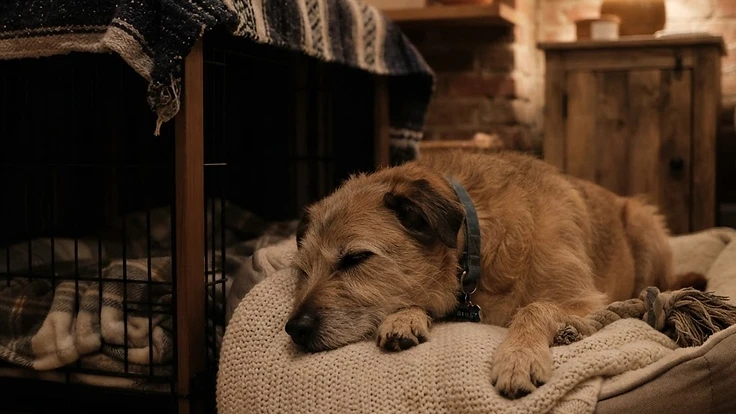
Simple environmental tweaks that help nervous pets feel safe at home.
Rescue animals often arrive carrying invisible luggage: the memory of a door that slammed, a hand that wasn't gentle, a place that wasn't safe. They don't know yet that your home is different. Your job, in those first weeks, isn't to fix them — it's to make it safe enough that they can begin to relax on their own timeline.
The good news is that small environmental changes create disproportionate calm. Here's what we've seen work, again and again.
Give them a retreat. A quiet corner with a covered bed or a crate (door removed or left open) they can retreat to is non-negotiable. This is their decompression zone. Don't reach in, don't coax them out, and ask guests to do the same. Let them come out on their terms; every voluntary exit is a tiny vote of confidence in the world.
Lower the volume. To a nervous pet, the average home is loud. TVs, doors, dropped keys, footsteps overhead — it all adds up to a low-grade alarm that never stops. Soft-close cabinet bumpers, a radio tuned low to mask startling sounds, and simply closing doors gently can lower the ambient threat level dramatically.
Predictability is kindness. Feed, walk, and rest at the same times each day. Routine turns an unpredictable world into a survivable one, and anxious animals bloom when they stop having to brace for surprises. Even the placement of their bed and bowl should stay consistent in the early weeks.
Decompression walks. Skip the busy park and the paved path where every passerby is a potential threat. Quiet trails and empty fields where they can sniff at their own pace build confidence faster than any formal training session. Let them lead. Sniffing is processing.
Read the body language. Learn the early signs of overwhelm — lip licks, yawns, averted eyes, a tucked tail, sudden stillness — and respond by increasing distance, not by reassuring. Reassurance given at the wrong moment can accidentally reinforce fear; space given at the right moment teaches trust.
Patience isn't a strategy here — it's the whole thing. There will be setbacks, and that's normal. Progress in rescue work is rarely a line; it's a slow, upward wobble. Month by month, you'll notice the retreats shorten, the sighs deepen, and a tail that was clamped tight begin, tentatively, to wag. That's the transformation. Give it time, and it will come.