What to Do When a Pet Dies at Home: A Practical Guide
By AutoSEO
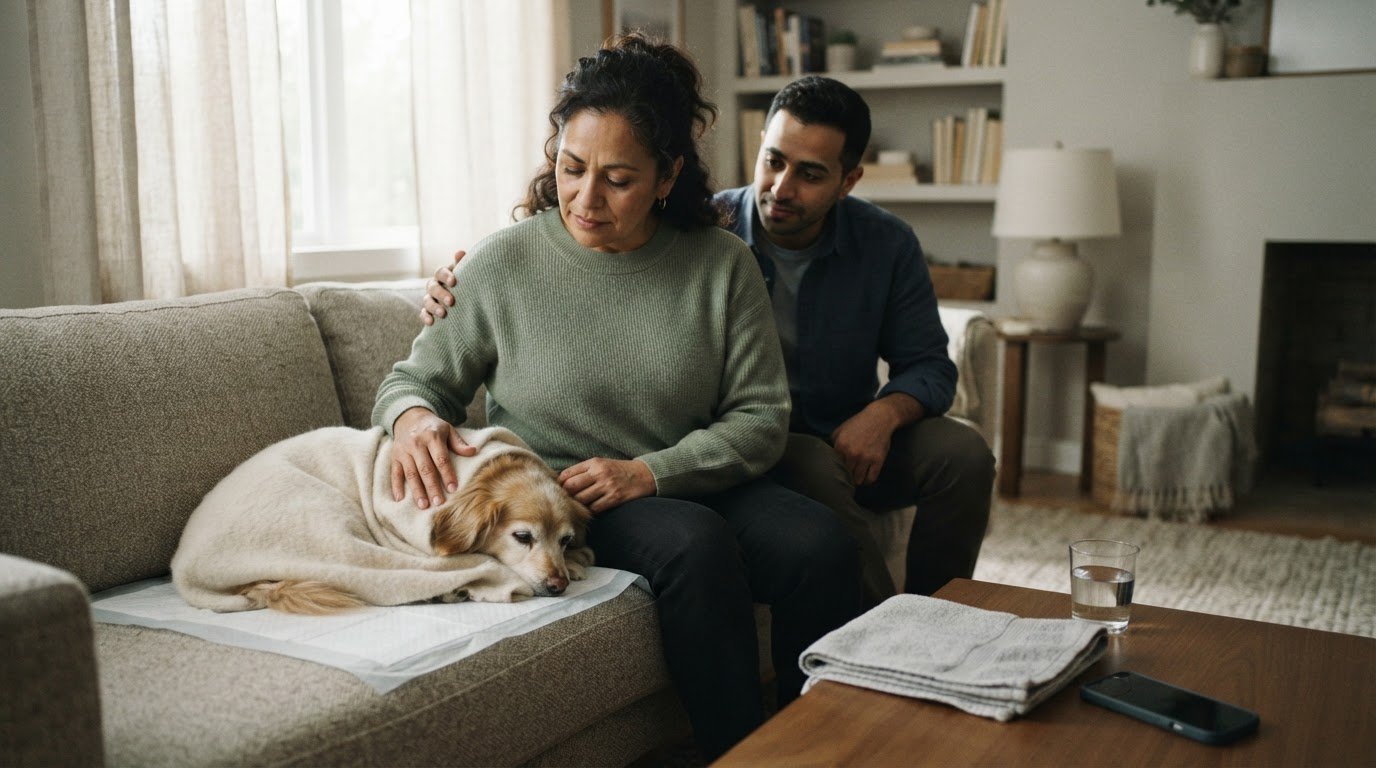
Learn what to do when a pet dies at home with this gentle guide. Explore practical body care steps, burial or cremation options, and coping with pet loss.
If you’re searching for what to do when a pet dies at home, you may be in shock, unsure whether your companion has passed, or worried about what comes next. Pause, take a breath, and focus on one decision at a time. You don’t have to make every aftercare decision right away.
This guide covers the next steps: what to do if you’re uncertain about your pet’s condition, how to care for their body while you consider your options, and whom you can call for guidance. You’ll also find a comparison of common aftercare choices, so you can understand them without feeling pressured to decide before you’re ready.
Grief can affect everyone in the home differently, and there’s no single right way to remember a beloved companion. When it feels right, preserving and sharing your pet’s story can be one gentle way to honor the life you shared. For now, take things at your own pace, ask someone you trust to be with you, and begin with the next small step.
Key Takeaways
- If you’re unsure whether your pet has died, seek veterinary guidance rather than relying on an online checklist.
- A clean towel or blanket and an absorbent layer can help you care for your pet’s body gently at home.
- Compare cremation and burial options, including keepsakes and the importance of local burial rules.
- Use a simple household checklist to share practical tasks, speak honestly with children, and postpone decisions that can wait.
- When you feel ready, consider saving a photo or memory as a first step toward honoring your pet’s story.
What to Do First When Your Pet Dies at Home
In the first moments, you don’t need to solve everything. Focus on a few manageable steps:
- Pause somewhere safe and take a slow breath.
- If you’re uncertain whether your pet has died, call a veterinarian or emergency veterinary clinic for guidance.
- If the death is confirmed or expected, give yourself a little time before arranging aftercare.
- Ask someone you trust to stay with you or help make calls if that would feel easier.
A pet may die at home after a known illness, or their death may be unexpected. Either situation can feel confusing, especially when you’re in shock. If there is any uncertainty, seek professional guidance rather than relying on an online checklist to determine whether your pet has died. When you’re unsure, the immediate priority is to get a veterinarian’s advice, then take the next step with support.
If You Are Unsure Whether Your Pet Has Died
You may notice that your pet isn’t responding or that you can’t see their chest moving. These observations can be frightening, but they aren’t a reliable way to confirm death, and this article can’t assess your pet’s condition. Call your veterinarian or an emergency veterinary clinic and describe what you’re seeing. Follow their instructions. Avoid repeated handling or trying to confirm the situation yourself when professional advice is available.
If you can’t reach your usual veterinarian, contact an emergency veterinary clinic for guidance. Keep your pet in a safe, quiet place while you call, and ask someone nearby to help explain the situation if speaking feels difficult. You don’t need to have every detail ready. Simply say what happened and what you’re observing.
Give Yourself a Moment Before Making Decisions
Once you know what has happened, you can slow down. You don’t have to choose cremation or burial, make every phone call, or organize a memorial all at once. Some practical arrangements may need attention sooner than others, but it’s okay to ask for help understanding the next steps and set aside decisions that can wait.
A trusted person can sit with you, call the veterinary clinic, or handle a small task while you spend a quiet moment with your companion. There’s no required way to say goodbye, and no right amount of time to take. You might sit nearby, speak softly, or simply be still. Grief can feel isolating, and the overview of Grief in animals discusses the emotional impact of pet loss and ways people cope.
If you’re asking what to do when a pet dies at home, remember that the first step isn’t to make every decision. Seek veterinary guidance if anything is uncertain, lean on someone you trust, and move forward one manageable choice at a time.
How to Handle and Care for Your Pet’s Body at Home
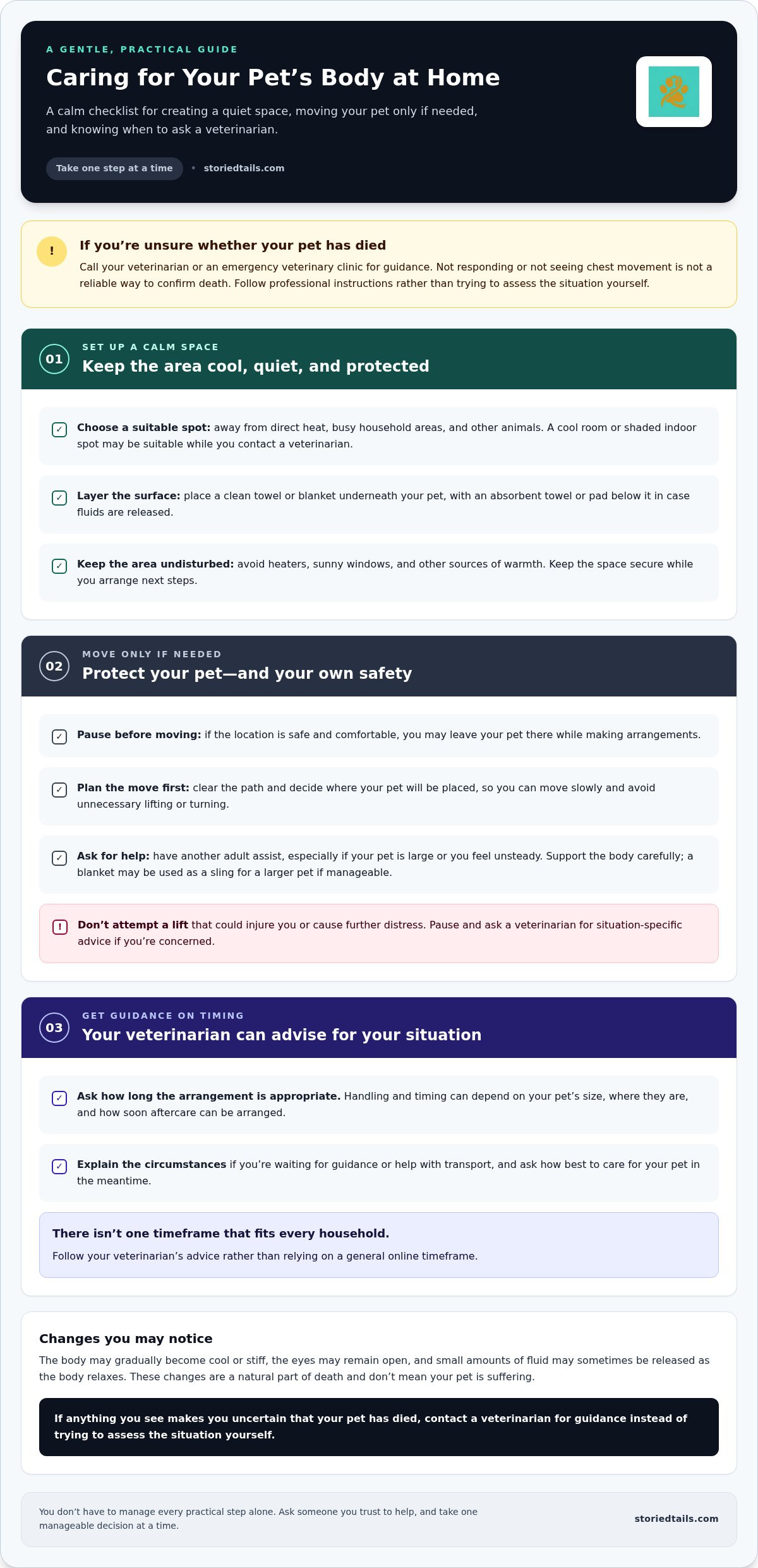
After a pet dies, their body may gradually become cool or stiff, and their eyes may remain open. Small amounts of fluid can sometimes be released as the body relaxes. These changes are a natural part of death and don’t mean your pet is suffering. If anything you see makes you uncertain that your pet has died, contact a veterinarian for guidance rather than trying to assess the situation yourself.
General body care can help keep your pet comfortable and protected, but a veterinarian is the right person to advise on handling and timing for your specific situation. The next steps may depend on your pet’s size, where they are, and how soon you can arrange aftercare. There isn’t one timeframe that fits every household.
Preparing a Quiet, Cool Place
Choose a place away from direct heat, busy household areas, and other animals. A cool room or shaded spot indoors may be suitable while you contact a veterinarian about what to do next. Lay down a clean towel or blanket, with an absorbent towel or pad underneath in case fluids are released. Keep the area secure and undisturbed, and avoid placing your pet near heaters, sunny windows, or other sources of warmth.
Follow your veterinarian’s advice about how long this arrangement is appropriate. If you’re waiting for guidance or help with transport, explain the circumstances and ask how best to care for your pet in the meantime. Needs can vary, so don’t rely on a general online timeframe.
Moving Your Pet Gently
You don’t have to move your pet unless it’s necessary. If the location is safe and comfortable, it may be easier to leave them there while you make arrangements. If you need to move them, ask another adult to help, especially if your pet is large or you’re feeling unsteady. Support the body carefully, and use a blanket as a sling for a larger pet if that feels manageable. Don’t attempt a lift that could injure you or cause further distress.
Before moving your pet, clear the path and decide where you’ll place them. This can help you move slowly and avoid lifting or turning them more than necessary. If you’re concerned about lifting, your pet’s condition, or what to do next, pause and ask a veterinarian for advice specific to your situation. Your safety matters, too.
Caring for a pet’s body can feel tender and difficult, and you don’t need to manage every practical step alone. If grief is making it hard to cope, broader mental health resources are available through the SAMHSA National Helpline. Once immediate arrangements are underway, and only when it feels right, StoriedTails’ digital pet memorial and community hub offers a way to preserve and share your pet’s life story.
Pet Aftercare Options: Cremation, Burial, and Who to Call
After immediate needs are taken care of, you can begin learning about aftercare. A veterinarian can explain local options, help you understand arrangements, and advise how your pet’s body should be handled while you decide. Common choices include individual or communal cremation and burial, where permitted. There’s no single right choice, and you can take time to understand the options before making a decision.
The comparison below is a starting point. Details such as keepsakes and arrangements vary, so find out what applies to your pet and location.
| Option | What it involves | Keepsakes | Do local rules apply? |
|---|---|---|---|
| Individual cremation | Your pet is cremated individually. | Ashes may be returned, depending on the arrangement. Ask what’s included. | Ask about local arrangements and any applicable requirements. |
| Communal cremation | Several pets are cremated together. | Ashes generally aren’t returned separately. Confirm the policy before deciding. | Ask about the service and any local requirements. |
| Burial at home | Your pet is buried on private property. | You may choose a marker or another remembrance, if appropriate. | Yes. Requirements can depend on your location, property, and circumstances. |
| Burial in a pet cemetery | A cemetery arranges a resting place for your pet. | Ask what memorial or keepsake choices are available. | Ask about cemetery arrangements and relevant local requirements. |
Choosing Between Cremation and Burial
Cremation uses a process that reduces the body to ashes; burial places the body in the ground. Neither is inherently more meaningful than the other. The choice may reflect personal wishes, practical needs, or what feels right for your household. Burial rules can vary by location and may depend on where the burial would take place and the circumstances, so don’t assume a method is permitted everywhere. A veterinarian can direct you to reliable local guidance. Take the time you need to understand your options.
What to Ask When Arranging Aftercare
When you’re ready to make calls, a short list can help you keep track of information while grieving. Start with your veterinarian, who can discuss local aftercare services and handling arrangements. You might ask:
- What aftercare options are available for my pet?
- How will my pet’s body be cared for, and what happens during transport or collection?
- If I choose cremation, can ashes be returned, and are other keepsakes possible?
- What is the expected timing, and should I prepare anything before transport or collection?
- If I’m considering burial, where can I find the requirements that apply to my location?
You don’t have to know every answer before calling. Tell the person you speak with that you’re grieving and would appreciate a clear explanation of the next steps. When you’re deciding what to do when a pet dies at home, reliable guidance can make the choices feel more manageable, one decision at a time.
A Practical Checklist for Your Household After a Pet’s Death
Grief can make ordinary tasks hard to organize. A short household checklist can help you share the practical work without expecting everyone to move at the same pace. If you’re wondering what to do when a pet dies at home, focus first on what needs attention now and leave the rest for a time that feels more manageable.
- Make the necessary call. Contact a veterinarian for guidance about arrangements, especially if you still have questions about your pet’s condition or care.
- Ask someone you trust to help. They might make a call, write down instructions, or simply stay close while you decide what comes next.
- Keep your pet’s resting place calm and secure. Follow veterinary guidance about caring for their body while arrangements are made.
- Separate immediate needs from later choices. Focus on arranging care now. Memorial plans, sharing news, and sorting belongings can wait.
- Check in with everyone at home. Offer children and other pets reassurance and familiar routines, without expecting everyone to respond in the same way.
Grief has no single timetable, and there’s no required way to respond. Someone may want to talk, while another person needs quiet. A child may ask questions right away or return to the subject later. Patience can make room for each person’s way of missing a much-loved companion.
Supporting Children and Other Pets
Use clear, gentle words with children, suited to their age and understanding. Saying “our pet died” helps them understand what happened; phrases such as “went to sleep” may confuse or frighten them. Invite questions and answer honestly in simple language. If they wish, children can take part in a quiet goodbye, draw a picture, or share a favorite memory, but participation should be their choice.
Other pets may notice a household change, or they may seem to carry on as usual. Keep feeding, walks, and rest times familiar where you can, and offer calm attention without forcing interaction. Notice changes in behavior, and seek veterinary advice if you’re concerned about your surviving pet’s wellbeing.
Share the Practical Tasks
Choose one trusted person to help with calls or write down information as you receive it. Another person might take care of meals, household needs, or the surviving pets. Specific offers of help can be easier to accept than a broad “let me know what you need,” so ask someone to handle one task at a time.
Some arrangements need attention soon, but not every decision does. Give yourself permission to postpone tasks that aren’t time-sensitive, and reach out to someone supportive if grief begins to feel isolating or difficult to carry alone. When your household feels ready, you can preserve and share your pet’s story through a digital memorial and community hub, at your own pace.
When You’re Ready, Preserve Your Pet’s Story
There’s no deadline for remembering your pet in a particular way. You might want to keep their story close right away, or need time before looking at photographs or talking about them. Either response is natural. A tribute isn’t a task to complete or a measure of how much you loved your companion. It’s simply one possible way to honor the life you shared.
Start With One Memory, Not a Perfect Tribute
Choose one small thing that feels meaningful: a photograph, the sound of your pet greeting you, a favorite walking route, or a habit that always made you smile. You can write a few lines privately, save the memory for later, or share it with family and friends. Let the first step be as simple as you need. You don’t have to gather every photograph or find the perfect words.
Memories often live in ordinary details. Perhaps your cat always settled beside a sunny window, or your dog carried the same toy from room to room. One detail can hold the warmth of a much larger story. If writing feels difficult, ask a family member to tell you a favorite memory, record a few words for yourself, or return to the idea another day.
For families, sharing stories can help each person remember the pet in their own way. One person might want to talk, while another prefers to keep a photograph nearby. You can invite others to contribute without asking them to do so, and keep your own memories private if that feels more comfortable. Remembrance belongs to you and your loved ones. It doesn’t have to be public to matter.
Consider a Digital Memorial When It Feels Right
A digital memorial can give loved ones a shared place to preserve and celebrate a pet’s life story. StoriedTails is a digital pet memorial and community hub for preserving pets’ stories and sharing their legacy with family and friends. Read this digital pet memorial guidance for ideas about online remembrance, without feeling that you need to make a decision today.
When you feel ready, a digital space can bring memories together so family and friends can revisit the story of the companion they loved. You might begin with a photograph or one sentence about what made your pet unmistakably themselves. You don’t have to share anything before you’re comfortable, and taking time doesn’t diminish the bond.
After considering what to do when a pet dies at home, remember that remembrance can come later, in small pieces, or in a form that feels entirely personal. If a shared digital place feels comforting, explore StoriedTails when you feel ready. Your pet’s story can be held gently, at your pace.
Let Your Next Step Come in Its Own Time
The care you shared with your pet doesn’t end with their life. It continues in the stories you carry, the small routines you remember, and the ways their presence shaped your home. There’s no need to turn those memories into something polished or share them before you’re ready. A quiet thought held close can be meaningful on its own.
If you came here wondering what to do when a pet dies at home, remember that you can move at a human pace. Practical decisions may need your attention, but remembrance can wait until it feels comforting rather than difficult. When the time comes, a shared place to celebrate your companion’s life may help loved ones hold those memories together.
StoriedTails is a digital pet memorial and community hub for preserving and sharing pets’ life stories. Explore StoriedTails to preserve your pet’s story when you feel ready. For now, be gentle with yourself and trust that love doesn’t need a deadline.
Frequently Asked Questions
What should I do if my pet dies at home overnight?
If you’re certain your pet has died, keep them in a cool, secure place and contact your regular veterinarian when they open for guidance. If you’re unsure, or the death was sudden and concerning, call an emergency veterinary clinic rather than waiting until morning. If making the call feels difficult, ask someone you trust to sit with you, explain what happened, or write down the advice you receive.
How long can I keep my deceased pet at home?
There isn’t one timeframe that’s right for every situation. The temperature in your home, your pet’s size, and the aftercare arrangements you’re considering can all affect what’s appropriate. Keep your pet in a cool, secure place and contact a veterinarian or aftercare service promptly for advice tailored to your circumstances. If you’re waiting for a callback, explain the conditions at home and ask what to do in the meantime.
Should I let my child see a pet who has died?
There’s no single right choice for every child, so explain what has happened and let them decide whether they want to say goodbye. Before they approach, describe simply and gently what they may see, and reassure them they don’t have to touch the pet. Stay close to answer questions, which may come later as well as in the moment. A child can also remember their pet in another way, such as by drawing a picture.
Should my other pets see the pet who died?
Some households choose to let surviving pets be nearby briefly, while others keep them apart. There’s no guaranteed response. Consider what feels manageable for you, how the death occurred, and any veterinary advice. If you do allow them near, supervise calmly and give them space to move away. Keep familiar routines, such as mealtimes, where possible, and contact a veterinarian if you notice health concerns or behavior changes that worry you.
What should I do if my pet’s death was sudden or the cause is unknown?
Contact a veterinarian promptly and describe what you know, including any possible access to medication, chemicals, or other hazards. Don’t handle suspected hazardous substances while trying to investigate. Explain the concern and follow the veterinarian’s instructions about your pet’s body and whether an examination may be needed. If another animal could have encountered the same substance, mention that too and ask what steps to take for them.
Can I bury my pet in my backyard?
Possibly, but whether backyard burial is suitable depends on the requirements where you live and the circumstances. Before digging, contact your local authority for the rules that apply to your property, and ask a veterinarian for guidance if the cause of death is unknown. If burial isn’t suitable or permitted, a veterinarian can help you understand other local aftercare arrangements. Taking time to get clear information can help you make a considered choice.