Pet Loss Sympathy Messages to Share Comfort and Support
By AutoSEO

Looking for a pet loss sympathy message? Explore heartfelt words, comforting card ideas, and touching quotes to support a friend grieving a beloved companion.
The kindest pet loss sympathy message doesn’t need to be elaborate. Use the pet’s name, recognize the bond they shared, and offer a fond memory or a quiet willingness to listen. This article includes 10 simple messages you can adapt for a card, text, or conversation.
Finding the right words can feel difficult when someone is grieving a beloved companion, especially when you want to comfort them without minimizing their loss. Here you’ll find thoughtful pet loss sympathy messages, shared-memory ideas, supportive words, and quotes to help you express care sincerely. You’ll also find gentle ways to acknowledge their grief while giving them room to remember their pet in their own way.
Key Takeaways
- Make your message feel personal by using the pet’s name and recalling a small, meaningful memory.
- Offer support that fits the grieving person, whether that means listening, helping with a daily task, or giving them space.
- Choose a quote or saying that honors the bond without trying to explain away the loss.
- Adapt a short message for a card, text, or conversation, and let your sincere care matter more than perfect wording.
- Explore simple ways to preserve a pet’s story and keep cherished memories close.
1. Personalized condolences and shared memories
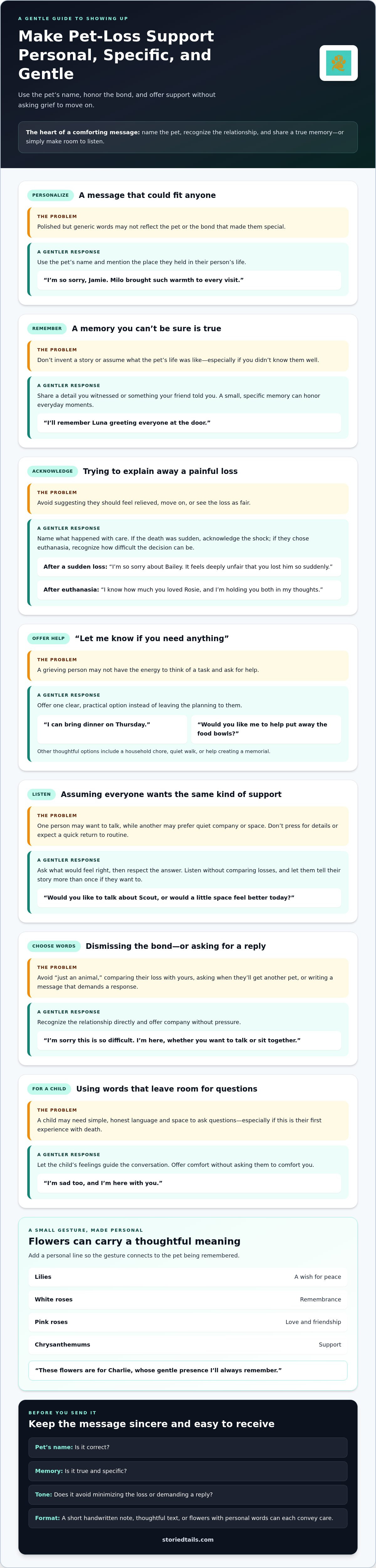
Begin with the pet’s name, then recognize the place they held in their person’s life. A heartfelt pet loss sympathy message might say, “I’m so sorry, Jamie. Milo brought such warmth to every visit.” Naming Milo makes the message personal, while a familiar detail shows you remember their bond. A simple, specific sentence often feels more comforting than polished words that could fit anyone.
Choose a memory that celebrates the pet’s character. You could write, “I’ll remember Luna greeting everyone at the door,” or, “Your stories about Jasper’s love of sunny windows always made me smile.” These specific condolences honor the everyday moments that mattered. If you didn’t know the pet well, mention something your friend shared rather than inventing a memory or assuming what their life together was like.
Sharing memories can offer comfort without asking the grieving person to feel differently. Heather Myers recommends asking whether they’d like to share favorite stories, or offering a fond memory of the pet yourself. Try, “I’m thinking of you and remembering the way Pepper followed you through the garden.” That detail gives your friend room to respond, share another story, or simply receive your message.
If the death was unexpected, acknowledge the shock and unfairness instead of reaching for an explanation. “I’m so sorry about Bailey. It feels deeply unfair that you lost him so suddenly.” If the person chose euthanasia, recognize how difficult the decision can be: “I know how much you loved Rosie, and I’m holding you both in my thoughts.” Avoid suggesting they should feel relieved or move on.
Flowers can accompany a note when you want to send a tangible expression of care. Lilies can convey a wish for peace, white roses remembrance, pink roses love and friendship, and chrysanthemums support. Add a personal line, such as, “These flowers are for Charlie, whose gentle presence I’ll always remember.” The note connects the gesture to the pet, rather than leaving the flowers to speak for themselves.
Keep sympathy quotes brief and sincere. “The love you shared with Oliver remains part of your story” honors enduring memories without minimizing grief. Grief counselor Marty Tousley says a sympathy card, note, or letter can be reread for weeks, months, or even years, so write something the person may welcome returning to. Sample card messages can also help you find a natural starting point.
Before sending your condolences, read them once as if you were the grieving friend. Check that the pet’s name is correct, the memory is true, and the message doesn’t demand a reply. A short handwritten note, a thoughtful text, or flowers with a few personal words can each convey care when they reflect the life being remembered.
2. Offering support to a grieving pet owner
Support begins with noticing what your friend needs, rather than assuming everyone in the family grieves alike. One person may want to talk about a beloved dog, while another may prefer quiet company. Try asking, “Would you like to talk about Scout, or would a little space feel better today?” Then respect the answer without pressing for details or expecting a quick return to routine.
Active listening can help someone feel supported through a difficult moment. Marty Tousley recommends listening carefully and allowing a grieving person to tell their story more than once. Give them room to speak about the final days, daily rituals, or the comfort their pet offered. Share your own experience only if they ask, and avoid comparing losses. Each bond has its own history.
Practical help can make the day feel more manageable. Instead of saying, “Let me know if you need anything,” offer one clear option: “I can bring dinner on Thursday,” or, “Would you like me to help put away the food bowls?” A meal, household chore, quiet walk, or help creating a memorial can ease a small burden without asking your friend to organize support.
After a prolonged illness, reassure the owner that they cared for their pet as best they could. If they chose euthanasia, acknowledge how painful that decision can be: “I know how much you loved Poppy, and I’m here to listen.” Avoid implying they should feel only relief. Their choice may have come from love, yet grief can still bring doubt, sadness, or longing.
For a child, shape your words around their age and relationship with the pet. A child who fed and played with a cat each day may need simple, honest language and room for questions. You can say, “I’m sad too, and I’m here with you,” without asking the child to comfort you. Since a pet’s death may be a child’s first experience with death, let their feelings guide the conversation.
What should you avoid saying to someone grieving a pet? Don’t ask when they’ll get another pet, compare their loss with yours, or suggest the pet was “just an animal.” Those words can dismiss a relationship built through daily care and unconditional companionship. A heartfelt alternative is, “I’m sorry this is so difficult. I’m here, whether you want to talk or sit together.”
Offer time as well as presence. Check in gently later, because grief doesn’t follow a schedule; a short message can say, “I’m thinking of you and Max today.” If your friend wants a way to honor their pet’s spirit, you might explore a shared digital memorial together, while letting them choose what feels right.
3. Acknowledging the bond between a person and their pet
For many people, a pet is family: a companion woven into everyday routines and treasured memories. A thoughtful condolence recognizes that closeness instead of treating the loss as small. Try, “I’m so sorry about Benny. He was your beloved pet and a wonderful part of your family.” This wording honors the relationship directly, without asking the grieving person to explain why it matters.
Use the pet’s name early, then connect it to a detail that reflects their personality. “I’ll remember how Pippa waited beside the window for you” feels more personal than “Pets are special.” Think about what the owner has shared: a dog’s joyful greetings, a cat’s quiet company, or a rabbit’s curious habits. A true detail helps the person feel that others remember the animal as an individual.
Personality-based messages can celebrate what made the pet unmistakable. You might write, “Rufus had a gift for making every room feel brighter,” or, “Mabel’s gentle nature made visitors feel welcome.” Keep the description grounded in something you witnessed or heard from the owner. If you never met the pet, refer to a story the person told rather than inventing traits or claiming a closeness you didn’t share.
Choose words that affirm the bond without defining how the owner should grieve. “The love you and Daisy shared was clear in the way you cared for her” recognizes everyday devotion. Another option is, “I know how much Milo meant to you, and I’m so sorry.” Avoid saying the pet “had a good life” to close the conversation. Even well-meant reassurance can feel like a judgment about someone’s sorrow.
Short quotes can offer the same recognition when they sound sincere in your voice. For example, “A beloved companion leaves pawprints in the heart” offers a gentle image, while “Your love for Finn will always be part of your story” focuses on the relationship. Treat these as starting points, not lines you have to copy word for word. Add the pet’s name or a personal detail, then read the message aloud to see whether it sounds natural.
When writing to a family, acknowledge that different people may remember different parts of the pet’s life. A note could say, “We’ll remember Scout’s happy greetings and the comfort he brought to your home.” For one person, make the message more intimate: “I know how deeply you miss Scout beside you each morning.” In both examples, a name and a specific connection make the words more meaningful than a general expression of sympathy.
4. Pet loss quotes and sayings
A well-chosen saying can help express what feels difficult to put into your own words. For a sympathy card, choose a line that honors the pet’s place in the person’s life rather than trying to explain away the loss. “The love you gave each other remains part of your story” is an original example you can adapt with the animal’s name or a detail about their bond.
Famous quotes about pets may feel meaningful, but accurate wording and attribution matter. If you include a quotation from a named author, use their name only when you can verify the exact words. Otherwise, write an original line in your own voice. That small choice avoids attributing a familiar-sounding saying to someone who may never have said it.
Consider what you want the saying to hold: the pet’s character, the relationship, or the memories left behind. A lighthearted line may suit a friend remembering a mischievous terrier, while a quiet expression may better honor a gentle older cat. For example, “Milo’s curious spirit made every walk a little adventure” celebrates personality without suggesting that losing him should feel easy.
These original pet loss quotes offer different tones to adapt for your card:
- “Your home was brighter with Bella in it, and her love remains in your memories.”
- “The days you shared with Archie were a beautiful part of both your lives.”
- “You were so lucky to know each other, and Archie was lucky to be loved by you.”
- “Though Hazel is gone from your daily walks, the comfort she gave you still matters.”
Each line can feel more personal with a name or detail. Change “daily walks” to “quiet evenings beside you” if that better reflects Hazel’s routines. A specific image gives the saying a personal voice, while the pet’s name makes clear whose life you’re honoring.
Keep the message gentle and avoid phrases that turn grief into a lesson. “Everything happens for a reason” can sound dismissive after a sudden death. Instead, try, “I’m so sorry you’re missing Ben. I hope your memories bring moments of comfort.” This offers care without asking the grieving person to feel grateful or find meaning right away.
For a short sympathy card, one quote and one personal sentence are often enough. You might write, “The love you shared with Tilly will always be part of your family,” then add, “I’ll remember her gentle greeting at the door.” If a famous quotation feels too formal, leave it out. An honest line in your own words can carry the same tenderness.
5. Simple pet loss sympathy messages
A simple note can acknowledge that a pet was a companion and family member without asking the grieving person to explain their loss. Write the pet’s name, express your sympathy, and offer one sincere thought. For example: “I’m so sorry about Charlie. He was an amazing companion, and I’m thinking of you.”
What should you write in a pet loss sympathy message? Keep it personal and brief, without pressuring the person to reply. Mention the pet by name, recognize the bond, and make a specific offer of care only if you can follow through.
Here are 10 short messages to adapt for a card, text, or conversation:
- “I’m so sorry about Bella. My heart is with you.”
- “Thinking of you as you remember your beloved Max.”
- “Luna was a wonderful companion, and she’ll be remembered with love.”
- “I know how deeply you loved Milo. I’m here for you.”
- “Sending gentle thoughts as you grieve sweet Daisy.”
- “The love you shared with Oscar will stay with you forever.”
- “I’m so sorry your family is missing gentle Rosie.”
- “You gave Finn a life filled with care and love.”
- “I’ll remember the joy Archie brought to everyone around him.”
- “I’m thinking of you and ready to listen whenever you want.”
For a coworker or acquaintance, choose warm, respectful words without assuming you know the whole story. “I’m sorry to hear about your dog, Bailey. Please know I’m thinking of you” offers sincere condolences while respecting their privacy.
Let your relationship guide how much detail to include. A close friend may appreciate a shared memory, while a neighbor or colleague may prefer a simple acknowledgment. If you know the pet’s name, use it; if you don’t, “your beloved companion” is thoughtful without risking a mistake. Avoid statements that demand a response or set a timetable for feeling better.
Texts work well for a brief check-in, while a handwritten card gives someone words to return to later. Add one practical offer if it suits your relationship, such as, “I can bring dinner on Friday,” or, “I’d be glad to listen.” Clear, manageable offers feel more useful than a broad promise to do anything.
Before sending, read your note aloud and remove anything that minimizes the loss. A simple message can carry lasting care when it names the pet, honors the bond, and leaves room for grief. If a keepsake feels right, create a digital memorial to preserve a pet’s story.
StoriedTails: Digital pet memorial and community hub
StoriedTails offers a digital pet memorial and community hub for honoring a beloved animal’s life. When you’re ready to preserve stories, photos, and the moments that made your pet part of the family, a memorial can give those memories a place to gather. The hub also includes Living Pets and pet health record management, bringing remembrance together with ongoing care for the pets in your life.
There’s no single right time to create a memorial. You might begin with a favorite photograph, a small story, or a few words about the routines you shared. Visit StoriedTails to explore a place for your pet’s story and memories.
Let Their Memory Guide Your Next Step
The words you share can be one small part of how a beloved pet is remembered. In the days ahead, let the grieving person decide what remembrance looks like: keeping a favorite photograph close, writing down a story, or simply speaking the pet’s name. A pet loss sympathy message doesn’t need to resolve grief; it can remind someone that their love and loss are seen.
If you’re grieving, take your time choosing what to preserve and how to honor the life you shared. If you’re supporting someone else, follow their lead and keep showing care in ways that feel welcome. There’s no single path through loss, but a small act of remembrance can help keep a cherished bond present in everyday life.
If you’d like support exploring a meaningful way to honor a pet’s story, contact StoriedTails for support. May the memories you carry bring comfort, connection, and room for hope.
Frequently Asked Questions
What are short pet loss sympathy messages for a card or text?
A short note can offer comfort with one clear expression of care. Try, “I’m thinking of you and sweet Maple today,” or, “I’m sorry your home feels quieter without Theo.” For a text, keep the wording conversational and don’t expect an immediate reply. A card can include a brief closing, such as, “With care, Sam,” so the recipient knows who is holding them in mind.
What are examples of heartfelt condolences for losing a dog?
When someone loses a dog, mention a quality or routine that reflects their relationship. You could write, “I’m so sorry about Bruno. I’ll remember how proudly he carried his favorite ball.” If you didn’t know the dog, try, “I know how much Murphy meant to you, and I’m thinking of you.” A sincere message acknowledges the grief without assuming how the owner should feel.
What are examples of sympathy messages for losing a cat?
For someone grieving a cat, honor the small rituals that made their companionship distinctive. Write, “I’m sorry about Olive. I hope the memory of her curled beside your books stays close.” If you’re unsure what to say, keep it simple: “I’m thinking of you and your family as you miss Juniper.” A gentle, specific line recognizes the cat as an individual without making assumptions about the household.
How do you personalize a pet loss condolence message?
Choose one accurate detail that belongs to the pet and the person’s relationship with them. Mention a shared routine, a favorite place, or a story the owner has told you, then connect it to your sympathy. For example: “I’m sorry about Pip. I’ll remember how he waited by your desk during calls.” If you don’t know the pet well, personalize the note by acknowledging the owner’s feelings.
Should you mention the pet’s name in a sympathy message?
Yes, use the pet’s name if you know how the owner spells it and feel comfortable doing so. A name can make a message feel specific to the loss, rather than to grief in general. If you’re uncertain, use “your cat” or “your beloved companion” instead of guessing. Avoid nicknames unless the owner used them with you; familiar names can feel intimate or overly casual.
What is appropriate pet loss condolence gift and card etiquette?
Choose a gesture that suits your relationship and pair it with a brief note explaining your care. A card alone is appropriate; a small remembrance or donation in the pet’s honor can also be thoughtful if it fits the recipient. Keep gifts simple and avoid anything that requires them to respond, display it, or make a decision. Address the card to the person or family who is grieving.