Anticipatory Grief for a Pet: Understanding the Emotions and Finding Support
By AutoSEO

Navigating anticipatory grief for a pet can be overwhelming. Learn how to understand your complex emotions, find support, and care for your pet with love.
Grief can begin before goodbye. Anticipatory grief for a pet is the sadness, fear, or other emotions that may arise while your pet is still alive, often as they age, face serious illness, or experience a decline in quality of life. It can look different for everyone and doesn’t follow a set timeline.
You may feel torn between cherishing the time you have and worrying about what lies ahead. Caregiving may also take an emotional toll, and your feelings can shift from day to day. These responses don’t mean you love your pet any less, and you don’t have to make sense of them all at once.
This article explores what anticipatory grief can feel like, how caring for an aging or ill pet may affect you, and where support can come from. It also offers ways to stay connected in everyday moments, honor your bond, and care for yourself while caring for your pet.
Key Takeaways
- Notice how changes in your pet’s abilities or health may bring grief before a goodbye, and allow yourself to name what you’re feeling.
- Understand that hope, guilt, sadness, and relief can all arise, sometimes changing from day to day.
- Recognize when caregiving is weighing on you, and consider how trusted people or support groups can help you feel less alone.
- Find gentle ways to make meaningful memories that suit your pet’s comfort and the moments you share.
- Explore practical coping approaches, from maintaining simple routines to seeking support when grief makes daily life difficult.
What is Anticipatory Grief?
Anticipatory grief for a pet is the emotional response to an expected loss, beginning while your companion is still alive. It can grow alongside aging, illness, or changes in everyday abilities, and may shape how you experience the time you still share.
Meaning and Timing of Anticipatory Grief
This grief can begin with early signs of aging, a serious diagnosis, or a decline in quality of life, before a pet dies. A dog who can no longer climb stairs or chase a ball may make the reality of change feel immediate. Recognizing the feeling can help you understand why ordinary moments carry new meaning, without treating sadness as a sign that you’ve stopped caring.
Signs of Pre-Loss Pet Grief
Signs may include sadness, tearfulness, fear, anxiety, guilt, loneliness, irritability, and intense concern for your pet. You might think about your companion not being here next year or feel the need to talk about what’s happening. These feelings can arise while you’re still sharing meals, walks, or quiet evenings. Noticing them can help you name what you need instead of judging your response as abnormal.
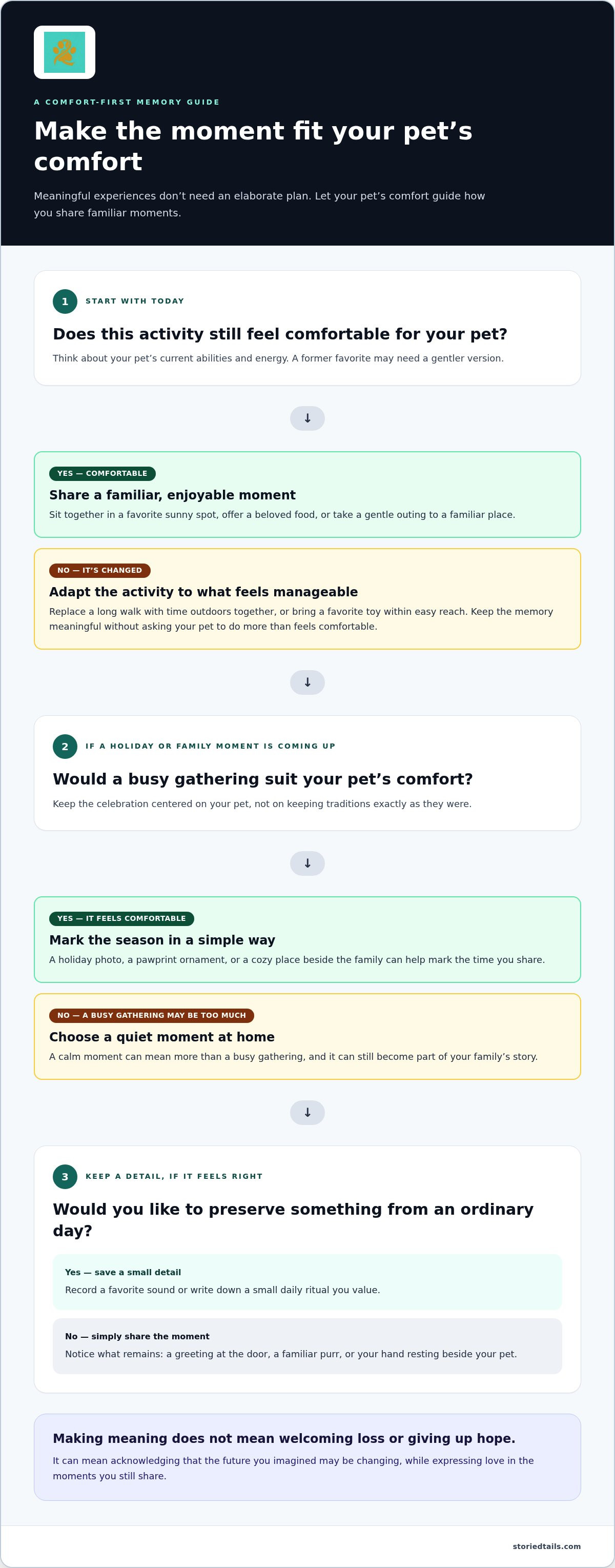
Meaningful experiences don’t require an elaborate plan. Choose activities your pet can comfortably enjoy, such as sitting together in a favorite sunny spot, offering a beloved food, or taking a gentle outing to a familiar place. If a former favorite activity no longer suits their abilities, adapt it: replace a long walk with time outdoors together, or bring a favorite toy within easy reach. The memory can honor your bond without asking your pet to do more than feels comfortable.
Holidays can make changes especially visible, as familiar traditions may look different when your pet ages or becomes ill. A simple holiday photo, a pawprint ornament, or a cozy place beside the family can help mark the season you share. Keep the celebration centered on your pet’s comfort. A quiet moment at home may mean more than a busy gathering, and the memory can still become part of your family’s story.
Finding meaning in pre-loss grief doesn’t mean welcoming loss or giving up hope. It can mean acknowledging that the future you imagined may be changing, while noticing what remains: a greeting at the door, a familiar purr, or a hand resting beside your pet. Pets may live into their teens, and aging can bring changes over time. Recording a favorite sound or writing down a small daily ritual can preserve details you value. These moments don’t remove grief, but they give love a place to be expressed while your pet is here.
Hope, despair, guilt, and other emotional changes
As anticipatory grief for a pet unfolds, hope and sadness may share the same day. To prepare for your pet’s death, discuss comfort, changes in quality of life, and treatment choices with your veterinarian. You can also research aftercare options without pressure.
Emotional Reactions to Impending Loss
Emotions before pet loss can include hope, fear, guilt, anger, shock, frustration, and despair. A hopeful day doesn’t cancel grief, and a difficult day doesn’t mean you’ve stopped loving your companion. If treatment is managing your pet’s diagnosis, hope may feel close; a new decline can bring fear or guilt back into focus.
These feelings can shift from day to day, much like emotions after bereavement. You might also feel relief after an exhausting caregiving period. Relief is a normal response after an overwhelming time, not proof that your bond mattered less.
Emotional and Physical Caregiving Effects
Caregiving burden describes the strain that can build while supporting a seriously ill pet. Approximately one-half of pet caregivers experience this burden, and greater burden is associated with more stress, anxiety and depression symptoms, and lower quality of life. This connection matters: tending to your own needs can help you continue providing loving care.
Daily tasks can also affect your body and routine. Lifting a pet into a car, arranging medication, or waking for nighttime care may leave less time for rest. Notice which task feels hardest, then ask someone you trust to help with one specific part, such as transport or meal preparation.
Accepting and Acknowledging Emotions
Accepting an emotion means letting it be present without treating it as a decision or a failure. You can feel sad while caring for your pet, and hope for comfort while recognizing that the future may change. Naming the feeling, such as “I’m afraid after today’s appointment,” can make it easier to share.
Journaling offers a private place to acknowledge what’s changing. Write about one good moment, one worry, or a hope you’re carrying. A few lines about your pet settling beside you can be enough. Creative notes can also make room for grief over lost plans and the future you imagined.
When a new loss brings up memories of an earlier pet, note what feels familiar and what is different this time. A veterinarian can introduce quality-of-life assessments early, helping you track changes and consider comfort alongside treatment. For the days when words feel difficult, preserving a story or memory in a digital pet memorial can offer another way to honor your companion.
Disenfranchised grief and caregiving strain
Caregiving can bring sadness and exhaustion alongside love for your pet. Naming the strain can help you notice when you need support, rest, or a clearer division of care.
Disenfranchised Grief
Disenfranchised grief is sorrow that feels unseen or unsupported by others. Some people may not understand why losing a pet brings such deep sadness, leaving caregivers to grieve privately while managing daily care. That lack of recognition can make it harder to ask for help. Sharing one specific experience, such as missing a favorite walk your pet can no longer manage, can help someone understand what has changed.
A veterinary team can also make space for an open, non-judgmental conversation about difficult decisions. Animal hospice and palliative care providers may help caregivers identify and validate feelings before and after a pet’s death. Their support can make room for questions about comfort without treating grief as something you must hide.
Caregiver Stress and Burden
Caregiver burden is the emotional and practical weight of supporting a pet with serious illness. Greater burden is associated with more stress, anxiety and depression symptoms, and lower quality of life. Care can become harder to sustain when every task rests on one person. Arranging medication, transport, and household duties, for example, may leave little energy for rest or companionship.
Notice which responsibilities drain you most, then describe them plainly to someone you trust. You might ask a family member to handle a trip or invite a friend to sit with your pet while you take a break. Veterinarians can encourage support from family, friends, support groups, or a mental health professional. Accepting help is part of caring, not a failure of devotion.
Self-Care and Caregiving Limits
Self-care means protecting the basic needs that help you keep showing up, while setting limits around what one person can manage. Choose a practical boundary, such as asking someone else to coordinate appointments or taking a quiet meal break. If a task exceeds your capacity, discuss the caregiving plan with your veterinarian and focus on your pet’s comfort.
Recognize your efforts through specific acts, not only outcomes: you prepared a comfortable resting place, kept track of changes, or stayed nearby during a difficult evening. A simple note can make these contributions visible on days when guilt says you should have done more. If daily functioning becomes difficult, tell someone you trust and seek support from a counselor or support group.
Living with anticipatory grief
Living with anticipatory grief means caring for your pet while knowing loss may come, without letting every moment become a farewell. Grief can surface during ordinary activities, even when your companion is young or healthy. A quiet evening on the couch, a familiar greeting, or an empty space where your pet usually sleeps can stir worry. Let the feeling pass without deciding it must define the whole day.
Grief can arrive unexpectedly. A story about an ill pet, a friend’s loss, or a memory of an animal who died before can awaken fear about the future. Notice what brought the feeling forward, then return to what’s happening now: your pet beside you, a shared meal, or the sound of paws crossing the room. Knowing why a wave arrived can help you meet it with care rather than self-criticism.
Being present doesn’t require a perfect day or a special occasion. Choose an ordinary moment and give it your attention: feel your pet’s fur, notice their breathing, or sit together without reaching for your phone. If your pet enjoys a familiar routine, keep it comfortable. A shorter walk, gentle grooming, or a quiet greeting can preserve connection as abilities change.
A bucket list can offer ideas, not obligations. Write down activities your pet enjoys and adapt each to their comfort. A favorite park visit might become sitting in the car with the window open, while a lively game might become resting together with a cherished toy nearby. Set aside an idea if it no longer suits your pet. Caring means responding to who they are today.
Small traditions can help you feel connected without making each day a countdown. Take a seasonal photo, mark a favorite weekly ritual, or save a note about a funny habit. These acts don’t need to predict goodbye. They remind you that your relationship is happening in the present, through repeated gestures and shared familiarity.
Some days, grief may make you want to plan every detail or make an irreversible decision quickly. Pause during an intense emotional wave and focus first on your pet’s immediate comfort. Write down the question on your mind, then discuss changes in quality of life with your veterinarian when you’re ready. Living with uncertainty can mean tending to today, asking for support, and leaving room for both love and sadness.
How can I cope with anticipatory grief for my pet?
Start with what can support both you and your pet today: steady care, manageable routines, and people who can share the load. Coping doesn’t mean setting grief aside; it means making space for feelings while tending to your companion’s comfort.
Keep basic routines where possible. Regular meals, sleep, and familiar moments can provide structure when worry feels consuming. If you skip dinner after a difficult appointment, ask someone to share a meal with you. If nighttime care interrupts your rest, tell someone you trust which task they could take over. Small, specific requests are often easier to accept than a general offer of help.
If your pet’s health is declining, talk with your veterinarian about quality-of-life assessments and changes you’ve noticed. A simple record of appetite, movement, sleep, and interest in favorite activities can make patterns easier to discuss. Your veterinarian can help weigh treatment options against comfort and explain palliative care choices based on your pet’s condition. This conversation can support informed decisions without asking you to predict every change.
Accept help from family, friends, or a pet sitter when caregiving feels difficult to sustain. Someone could manage a trip to an appointment, prepare food, or sit with your pet while you rest. Animal hospice and palliative care providers may also offer emotional guidance before and after a pet dies. Sharing difficult feelings with someone you trust, a counselor, or a support group can make room for grief without carrying it alone.
Choose memory-making activities that fit your pet’s energy and comfort. You might record a familiar purr, save a photo from an ordinary afternoon, or write down a small habit you want to remember. Keep the activity gentle and optional; your pet’s needs matter more than completing a plan. A note about a good day can also remind you that care includes noticing comfort, not only monitoring decline.
When grief rises sharply, pause before making an irreversible decision that can wait. Write down the concern, focus on your pet’s immediate comfort, and revisit the question with support. If grief makes daily functioning impossible, seek additional support. Persistent thoughts of self-harm call for immediate help from someone you trust or a mental health professional.
If you’d like a dedicated place for memories as you care for your pet, preserve your pet’s story.
StoriedTails: Digital pet memorial and community hub
StoriedTails offers a digital pet memorial and community hub for honoring your companion’s story. You can preserve memories, share meaningful moments, and keep your pet’s place in your life visible as your family moves through change.
If your pet is still with you, Living Pets offers a space to celebrate their life now. Pet health record management can also help keep important care information organized alongside the memories and details you want to hold close. These offerings support remembrance and everyday stewardship; they don’t replace veterinary guidance or personal support from people you trust.
Whether you’re recording a beloved habit or keeping care details together, choose what feels useful for your family. You’re welcome to reach out to StoriedTails when you’re ready.
Carry your bond forward, one moment at a time
There’s no single way to prepare your heart for change. Let today be about the care your pet needs, while leaving room for feelings that may arrive tomorrow. If anticipatory grief for a pet feels difficult to hold alone, sharing your thoughts with someone who listens can make the next step feel more manageable.
You might also choose a small way to keep your companion’s story close, such as saving a favorite photograph or writing down a detail you never want to forget. These gestures don’t need to resolve grief or make the future certain. They can simply honor the relationship you’re living now, with tenderness for your pet and yourself.
When you’re ready to preserve a memory or explore a place to celebrate your pet’s life, visit StoriedTails. Take the time you need, and keep choosing the moments of care and connection that feel right for you and your companion.
Frequently Asked Questions
How do I handle grief days when I can barely function?
Make the next few hours more manageable and ask someone to help with one practical need. Someone you trust might bring food, handle a household task, or sit with your pet while you rest. If work or caregiving feels impossible, tell someone close and contact a counselor or mental health professional. If you’re thinking about harming yourself, seek immediate support from someone you trust or local emergency services.
Is it normal to feel hopeful one minute and devastated the next?
Yes, hope and devastation can coexist and shift throughout the day. You might feel encouraged after hearing that treatment is helping, then frightened when your pet struggles with a familiar activity. Neither reaction cancels the other. Try naming what changed in that moment, such as “the vet visit gave me hope” or “today’s pain worried me,” rather than demanding one steady emotion.
What can I do while my pet is still here?
Choose a small activity that suits your pet’s energy and preferences, then let their response guide you. You could sit beside an open window, offer a familiar blanket, or invite a gentle greeting from someone your pet enjoys. If you want to remember the moment, take a photo or write down a detail afterward. The goal isn’t to create a perfect memory, but to share time comfortably.
When should I get support if I’m grieving my pet before they’re gone?
Reach for support when grief makes everyday responsibilities difficult, or when fear and sadness feel too heavy to carry alone. You might tell a friend, “Could you come with me to the next appointment?” A counselor or support group can offer space to talk through complicated feelings. If thoughts of self-harm arise, seek immediate help from someone you trust or local emergency services.
Why am I grieving my pet when they are still alive?
Experiencing anticipatory grief for a pet can reflect your awareness that illness, aging, or changing abilities may alter the life you share. You may miss a routine that has already changed, such as your dog meeting you at the door or joining a favorite outing. This grief is tied to a meaningful bond and an uncertain future, even while your pet remains part of your daily life.
Why do I feel guilty no matter what I do?
Guilt can arise because you’re trying to make caring choices under painful uncertainty. You may question whether you noticed a change early enough or wonder if a different decision would bring more comfort. Write down the concern and the information you used, then discuss your pet’s needs with your veterinarian. Revisiting the facts can help separate what you could control from what illness or age changed.
What is anticipatory grief when a pet is seriously ill or nearing the end of life?
It’s grief that begins before a pet dies, as you face an expected loss and changes in your shared life. With serious illness or declining quality of life, feelings may surface over days, weeks, or even months. You might mourn future plans, such as a usual trip together, while still caring for your pet now. The experience differs from person to person and has no set timeline.
What are common signs of anticipatory grief in pet owners?
Common signs include sadness, tearfulness, fear, anxiety, guilt, irritability, loneliness, and deep concern about your pet. You might feel drawn to talk about the situation or find your thoughts returning to what life could be like after the loss. An upcoming family gathering, for example, may bring worry about your pet’s comfort. Noticing these responses can help you explain what you’re experiencing to someone supportive.