How to Prepare for Losing a Pet and Find Support
By AutoSEO

Learn how to prepare for losing a pet with compassionate advice on anticipatory grief, finding support, aftercare planning, and honoring your shared bond.
Preparing for a pet’s loss doesn’t mean giving up hope. It means making room for love and difficult feelings at the same time. Anticipatory grief is the sorrow, worry, or fear that can arise while a beloved pet is still alive, especially as their health changes. Learning how to prepare for losing a pet can help you make thoughtful plans, seek support, and stay present with the time you have together.
If you’re already feeling sadness, uncertainty, or guilt, you’re not alone. There’s no single right way to experience this. Your bond is personal, so your grief and the choices that feel meaningful to you will be personal, too.
This guide explains what anticipatory grief can feel like and offers practical ways to prepare emotionally. You’ll also learn how to find support, consider aftercare and memorial choices, reflect on spiritual beliefs, and honor your pet’s story while caring for yourself.
Key Takeaways
- Recognize that anticipatory grief can bring a mix of emotions, and find a way to express them that feels comfortable, such as talking, writing, or creating art.
- Choose people who can listen with care, and consider support from friends, family, fellow pet owners, or a grief counselor.
- Ease pressure during a difficult time by thinking ahead about goodbye plans, aftercare preferences, and meaningful ways to remember your pet.
- Make space for questions about your beliefs and the meaning of your bond, even if you don’t find clear answers right away.
- Focus on comfort, shared moments, and your own emotional needs as you prepare for change; there’s no single timetable for grief.
1. What is Anticipatory Grief?
Anticipatory grief is the sorrow and emotional strain that can arise before a pet dies. For some caregivers, it begins with the first signs of aging or declining health. A slower walk, missed meals, or a new care routine can make change feel close before goodbye arrives. You may experience sorrow, worry, fear, anger, guilt, confusion, indecision, isolation, or forgetfulness. These feelings can appear together, alternate, or shift as your pet’s needs change.
Noticing those feelings is part of coping, not a sign that you love your pet less. You don’t have to push grief aside to enjoy time together. Try naming what’s happening: “I’m worried about her comfort,” or “I feel sad when he can’t greet me at the door.” Naming a feeling can help you recognize what support or care you need in that moment.
Grief doesn’t follow a single schedule or step-by-step path. One day, you might feel able to focus on your pet’s favorite routine; another, a change in their health may bring fresh sadness. Let your response change without treating one difficult afternoon as proof that you’re coping badly. Your bond is larger than the illness or aging that prompted these feelings.
Expressing grief can give it somewhere to go. Talk with someone you trust about a memory, write a letter to your pet, or draw a familiar scene, such as a favorite resting place. Painting or sculpting can also help when words feel difficult. You don’t need to create something polished or share it; the act itself can help you acknowledge what you’re experiencing.
A small writing practice can make difficult moments more manageable. Write down one memory, one concern, and one thing you want to do together. For example, record a funny greeting, note a change you’ve noticed, then plan a quiet afternoon nearby. This keeps affection and practical concerns in view without asking you to resolve every question at once.
You don’t have to grieve alone or hide your feelings at home. Share a specific memory or concern with a friend, relative, or another pet owner who understands your bond. If someone responds differently, that doesn’t make your grief less real. People’s relationships with animals differ, and their losses bring distinct histories, routines, and challenges.
Try not to compare your grief with another person’s, even if they had a pet of the same age or illness. There’s no ranking for who feels a loss most deeply, and no deadline for feeling better. Learning how to prepare for losing a pet starts with allowing your feelings to be present while continuing to offer care, attention, and companionship. If health changes raise questions, keep relevant pet health records together and discuss your observations with your veterinarian.
2. Finding support from friends, family, and other pet owners
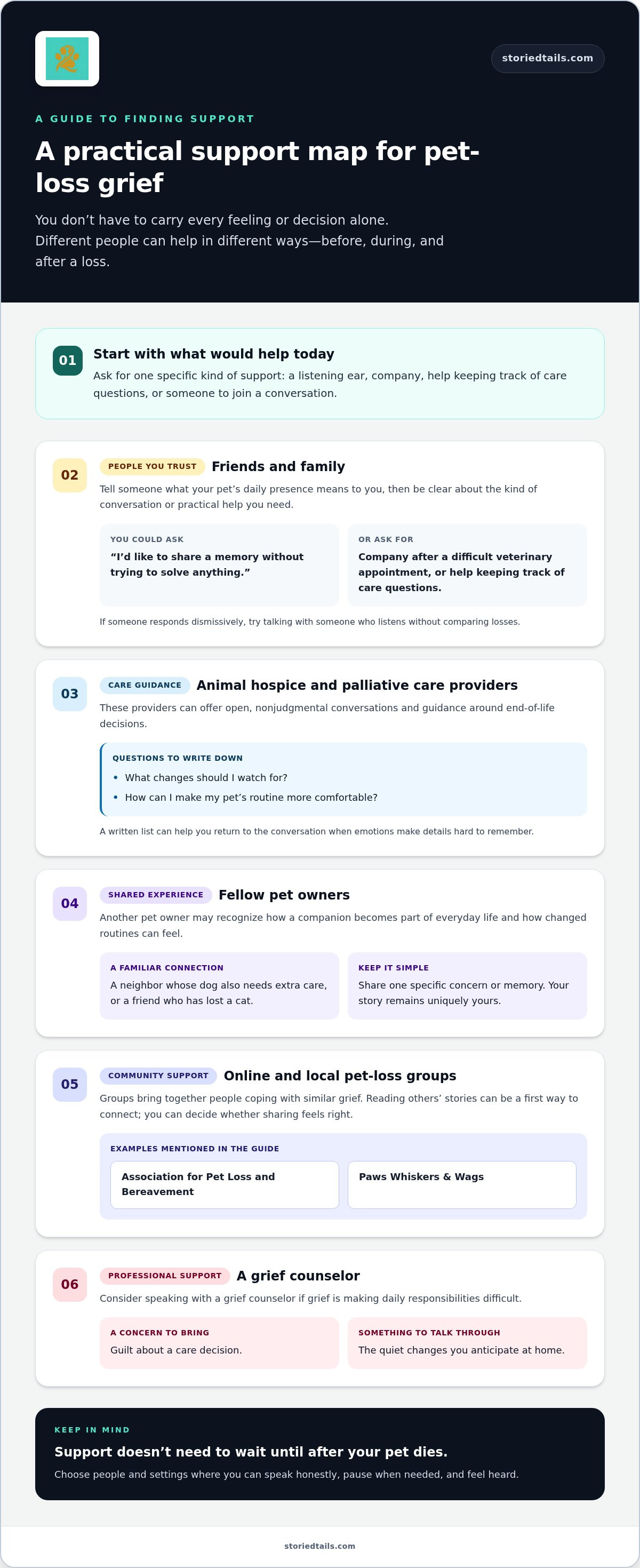
Choose someone you trust and tell them what would help today. You might ask a friend to sit with you after a difficult veterinary appointment, or ask a family member to help keep track of questions about your pet’s care. Specific requests give people a clearer way to support you, whether your pet is declining now or you’re grieving after a loss.
Friends and family may not understand the depth of your bond, especially if they haven’t cared for an animal themselves. Explain what your pet’s daily presence means to you, then name the kind of conversation you need. For example, say, “I’d like to share a memory without trying to solve anything,” or “Could you come along while I discuss care options?” If someone responds dismissively, try sharing with someone who listens without comparing losses.
Animal hospice and palliative care providers can offer open, nonjudgmental conversations and guidance around end-of-life decisions. These conversations can help you describe what you’re noticing, consider your pet’s comfort, and talk through difficult choices. Write down questions before a discussion, such as what changes to watch for or how to make your pet’s routine more comfortable. A written list can help you return to the conversation when emotions make it hard to remember every detail.
Fellow pet owners can understand how a companion animal becomes part of everyday life. A neighbor whose dog also needs extra care, or a friend who has lost a cat, may recognize the weight of changed routines. Share one specific concern or memory rather than feeling pressured to explain everything. Listening to another pet owner’s experience can offer connection, while your own story remains uniquely yours.
Online and local pet-loss support groups bring together people coping with similar grief. The Association for Pet Loss and Bereavement and Paws Whiskers & Wags are examples of online support groups. You can start by reading others’ stories, then decide whether sharing a memory or asking for encouragement feels right. A group can also help when friends are unavailable or don’t know what to say.
If grief is making daily responsibilities difficult, consider speaking with a grief counselor. You could bring a particular worry, such as guilt about a care decision, or talk about the quiet changes you anticipate at home. Support doesn’t need to wait until after your pet dies; compassionate conversations can help before, during, and after a loss. Choose people and settings that let you speak honestly, pause when needed, and feel heard.
3. Body care, cremation, burial, and memorial keepsakes
Thinking about aftercare before goodbye can ease the number of decisions you face later. Write down whether you’re considering cremation, burial, or another preference, and note what feels meaningful to you. You can also record questions about arrangements and choices for your pet. Keep your notes somewhere easy to find, rather than trying to remember every detail during an emotional moment.
Include body care in that plan. Decide who you’d like beside you, what kind of goodbye feels right, and whether you want time for a final moment together. If you share decisions with family, invite them to talk about preferences before a loss feels imminent. A quiet conversation can help everyone understand the plan and reduce last-minute uncertainty.
Memorial keepsakes can offer a tangible connection to shared memories. You might choose a favorite photograph, write a tribute, or keep a letter addressed to your pet. Consider what you’d want to revisit later: a playful habit, the comfort of a familiar presence, or a small ritual you shared. You don’t need to choose a single keepsake now; begin with the memory that feels closest.
While your pet is still with you, make memories in ways that suit their comfort and routine. Take a photograph during a familiar activity, record a short account of a favorite quirk, or spend a peaceful afternoon together at home. If your pet enjoys a particular toy or resting place, include it in the memory you preserve. Ordinary moments can hold meaning without requiring a special occasion.
After a pet dies, some people find it helpful to keep toys or bedding as reminders. Others may choose to share those items with another pet owner. You can set aside a favorite object now, then decide later whether keeping it close or passing it on feels right. Both choices can honor your relationship in different ways.
A written tribute can bring memories together when recalling them feels difficult. Start with a few details, such as how your pet greeted you, where they liked to rest, or what made you laugh. Add to it gradually, including joyful and tender memories as they come. A collection of photographs, notes, and stories can preserve your companion’s distinct character without requiring you to make every decision at once.
Considering spiritual beliefs about pets and an afterlife
Grief can bring questions about what happens after a beloved animal dies. You might wonder whether pets have an afterlife, what their lives mean, or why the bond feels so profound. You don’t need to settle these questions before goodbye. Write down the thoughts that return, then notice which beliefs, memories, or conversations help you hold them with care.
Your feelings may shift as you reflect. A belief that once felt certain might bring comfort, while another question remains open. Give yourself room to explore without forcing a conclusion. You could speak with a trusted spiritual leader, family member, or friend who respects your perspective. Ask them to listen rather than offer answers if that feels more supportive.
Memorials can make space for remembrance and shared reflection. Consider what would feel fitting: a quiet moment at home, a written tribute, or an online gathering where loved ones share stories. One memorial for Feisty Misses Peabody was held over Zoom, with guests sharing memories of her or their own pets. A gathering can honor your pet while helping people remember together.
If you’re planning a memorial, think about who to include and what would help them participate. You might invite a close friend to read a tribute, ask family members to share a favorite story, or set aside time for silence. A small, personal ritual can reflect your beliefs without requiring everyone to share them. Let the format honor the relationship you’re remembering.
Questions about euthanasia can carry spiritual and emotional weight. A veterinarian may recommend euthanasia when a pet’s quality of life has deteriorated, which may prevent further pain. Ask the veterinarian to explain the changes they’re seeing, how your pet’s comfort is being assessed, and what choices are under consideration. These questions can help you understand the recommendation and discuss care in light of your values.
It may help to write down what matters most before that conversation. You might want to understand whether your pet is comfortable, what signs indicate their condition is changing, and how each option relates to their wellbeing. You can also invite someone you trust to listen with you. Preparing questions won’t make the decision easy, but it gives your concerns a place in the discussion.
After a death, meaning may come through a belief, a family story, or the everyday ways your pet changed your life. You might preserve a memory in a tribute or share it during a gathering. There may be no concrete answer to every question, but asking can still be part of grieving. Let your beliefs and feelings guide what remembrance means to you.
5. Preparing emotionally for anticipated pet loss
Emotional preparation can’t prevent grief; it can help you meet the journey with more intention. Let feelings surface as they come, whether sadness during a familiar routine or worry after noticing a change. You might pause, name the emotion, and decide what would help in that moment: a conversation, quiet time beside your pet, or a note with questions for your veterinarian.
Caregiving can be mentally and physically exhausting, especially while you’re assessing quality of life and considering end-of-life decisions. Approximately one-half of pet caregivers dealing with a serious illness experience caregiver burden. Notice when responsibilities feel heavy, then choose one practical task to share, such as keeping a care schedule or arranging a family visit. Making room for your own needs is part of caring for your pet.
If your veterinarian encourages you to enjoy the time remaining, focus on small moments that suit your pet’s comfort. Sit together in a familiar room, offer a favorite gentle activity, or simply stay nearby. Spending time together during your pet’s final days can help you make the most of the time you have. You can also ask people close to your pet, such as adult children who grew up with them, whether they’d like to visit.
How do I prepare children for a pet’s death? Use simple, honest words suited to the child’s understanding, and explain what is happening without promising a particular outcome. Invite questions, listen without rushing to fix their feelings, and let them choose a meaningful way to spend time with the pet or remember them.
Preparing together can help children feel included without asking them to carry adult decisions. They might choose a favorite photograph, draw a picture, or share a memory at a family gathering. Let each child respond differently; one may want to talk, while another prefers a quiet activity. Keep familiar routines where possible, and make space for questions as they arise.
Make a short plan for the moments that feel hardest. Write down whom you can call, which routine you want to preserve, and one way you’ll honor your pet’s comfort. Preparing for loss can help you make caring choices, but it can’t remove grief. Processing emotions as they arise may make them feel less overwhelming, and your pet’s illness or death doesn’t define the whole relationship you shared.
After a difficult day, choose one gentle action rather than expecting yourself to feel ready. You might sit with your pet, share a memory with someone who understands, or write down what you want to remember about this time. Preserve your pet’s story in a lasting memorial as one way to honor the bond you’ve shared.
StoriedTails: Digital pet memorial and community hub
StoriedTails offers a digital pet memorial and community hub for honoring a pet’s life and preserving their story. Create a place for memories and connect with a community that understands the bond people share with animals. It may feel meaningful while your pet is still with you, as you gather stories and photographs, or after a loss, when you’re ready to remember.
StoriedTails also offers Living Pets and pet health record management, helping you keep records organized while caring for a pet. These offerings support different parts of your relationship, from everyday care to remembrance. Visit StoriedTails’ website when you’re ready to explore its memorial and community hub.
Carry Your Pet’s Story Forward
There’s no need to make every decision at once. Choose one small act that feels right today, such as saving a favorite photograph or writing down a memory you want to keep. These gentle choices can help you approach how to prepare for losing a pet in a way that honors your bond, without expecting yourself to feel ready before you are.
When you’d like a place to carry that care forward, StoriedTails offers a digital pet memorial and community hub, Living Pets, and pet health record management. Use these spaces to preserve your pet’s story, connect through remembrance, or keep records organized as you care for a living companion. Let your next step reflect what would be most meaningful to you now.
Visit StoriedTails to explore its memorial and community hub when you’re ready. The love you’ve shared remains part of your story, and each thoughtful step can help you honor it in your own way.
Frequently Asked Questions
What is Anticipatory Grief?
Anticipatory grief is emotional distress that begins while a pet is still alive, often as aging or declining health makes change more noticeable. You might feel sad during a familiar routine, worry after a new health concern, or guilt while considering care choices. These emotions can shift over time and don’t follow a fixed sequence. Recognizing them can help you identify what support or conversation would be useful now.
What should you do?
Start by writing down what has changed and what you need to decide. Note questions about your pet’s comfort, people you’d like to involve, and aftercare preferences you want to discuss. Share the list with someone you trust or bring it to a veterinary conversation. A short written plan gives you a place to return when emotions feel intense, without requiring you to settle every decision at once.
How can I emotionally prepare for the loss of a pet?
Make space for feelings while continuing familiar, comfortable routines with your pet. Set aside time to sit together, save a memory in writing, or ask someone close to visit. Choose someone you can turn to after difficult conversations or changes in care. Emotional preparation doesn’t take away grief; it helps you approach decisions and shared moments with greater attention and support.
What signs indicate a pet may be nearing the end of life?
Changes in your pet’s usual behavior, abilities, or comfort are worth noting, especially when they persist or affect familiar routines. Record observations such as eating less than usual, moving differently, or withdrawing from activities they once enjoyed. These examples don’t establish what is causing a change. Share your notes with your veterinarian, who can assess your pet’s health and discuss what the changes mean for care.
How do I discuss pet end-of-life care and euthanasia with a veterinarian?
Start with a direct description of what you’ve observed, then ask how those changes relate to your pet’s comfort and quality of life. You might ask, “What signs should I watch for?” and “How would each care option affect their comfort?” If euthanasia is discussed, ask the veterinarian to explain why it’s being considered and what the decision involves. Bring written questions and invite someone you trust to listen with you.
How can I make my pet comfortable during their final days?
Center your pet’s comfort and keep daily care gentle and familiar. Offer a quiet resting place, stay close during a routine they enjoy, and avoid activities that seem tiring or upsetting. Ask your veterinarian which changes in care suit your pet’s condition, and share new concerns promptly. Simple companionship, such as sitting nearby or speaking softly, can help you spend meaningful time together without adding pressure.
What should I do after my pet dies, including burial and cremation options?
Give yourself a moment, then follow the aftercare choice you’ve planned or feel ready to make. Options include burial or cremation; your preference, family wishes, and the memorial you want to create can guide the decision. If you haven’t decided, write down the questions that matter, such as how you’d like to say goodbye or whether you want a keepsake. Preserve a photograph or write a tribute when it feels right.
How can I cope with grief after losing a pet, and where can I find support?
Let grief unfold at its own pace, and choose support that feels comfortable. Talk with someone you trust, share a memory with another pet owner, or consider a grief counselor if the loss feels difficult to carry. Online support groups include the Association for Pet Loss and Bereavement and Paws Whiskers & Wags. Writing a letter to your pet or keeping a memory nearby can also give your feelings a place to go.