Feeling Relief After Pet Loss: Understanding Grief and Guilt
By AutoSEO

A feeling of relief after your pet's death can coexist with grief. Explore caregiving strain, euthanasia guilt, and compassionate ways to cope, seek support.
Grief and relief can exist side by side after a pet dies. A feeling of relief after your pet’s death may come when their suffering or the demands of caring for them have ended. It doesn’t mean you wanted them to die or loved them any less. You can miss them deeply and still feel less worried or exhausted.
If you’re struggling with the timing of euthanasia, guilt can make an already tender loss feel even harder. You may wonder whether you waited too long or made the decision too soon, even when you were trying to act with love and care.
This article explores why relief and grief can coexist, how anticipatory grief and euthanasia decisions may shape your feelings, and what can help you carry the loss. It also explains when extra support may help, so you can make room for your emotions without judging yourself for having them.
Key Takeaways
- Notice what your relief may be connected to, such as the end of worry, caregiving strain, or witnessing your pet’s discomfort.
- Understand how grief that begins while a pet is still alive can shape the emotions that follow a loss.
- Explore euthanasia-related guilt with compassion by remembering the care and concerns that informed your decision.
- Consider support from trusted people, a pet-loss group, or a counselor if grief feels difficult to carry alone.
- Find a meaningful way to honor your pet’s story, while allowing your own grieving process to unfold at its own pace.
When should I seek additional support after losing a pet?
Support can help when grief feels difficult to carry alone, whether it begins before a pet dies or returns later. Losing a companion can change daily routines, bring anxiety, and make familiar spaces feel different. There’s no single timetable for bereavement, and grief doesn’t follow a predictable sequence. If you’re struggling, reaching out can give you room to talk, remember, and make sense of what you’re feeling.
Grief may begin before a pet’s death. When you know your companion is seriously ill or nearing the end of life, you may start mourning while still caring for them. This is called anticipatory grief. You might feel sad during a quiet evening together, then anxious as you watch for changes in your pet’s comfort. Those moments can be emotionally demanding, even as you continue showing up for your pet.
Grief can shift from day to day. You might feel calmer while sharing a favorite story, then be caught off guard by an empty bed or familiar sound. The five stages described in Elisabeth Kübler-Ross’s On Death and Dying concerned emotions terminally ill people may experience after hearing their prognosis, not a required sequence for bereavement. Your feelings don’t need to follow a set order.
Consider additional support when you want help expressing grief or painful thoughts feel hard to hold alone. Pet-loss support groups, Humane Societies, hospice organizations, and counselors experienced in pet-loss grief can offer places to talk. If you keep reliving the events of a traumatic death, those memories may return for weeks or months. A counselor with pet-loss experience can help you explore them at a manageable pace.
Small acts of remembrance can give grief a gentle focus. You might write down a favorite memory, gather photographs, or plan a goodbye ceremony with people who loved your pet. A ceremony can provide a constructive focus during the early days of grief. Choose something that reflects your companion, such as sharing stories about their daily walks or setting aside a quiet moment to remember them.
Grief can return after an earlier loss, too. A new pet’s illness, a familiar anniversary, or the loss of another companion may bring back feelings you thought had eased. That doesn’t erase positive memories or mean you’re grieving incorrectly. The bond behind each loss is distinct, and remembering one pet can bring another close again. Family or friends who understand both relationships may be comforting listeners.
Can I feel grief and relief at the same time?
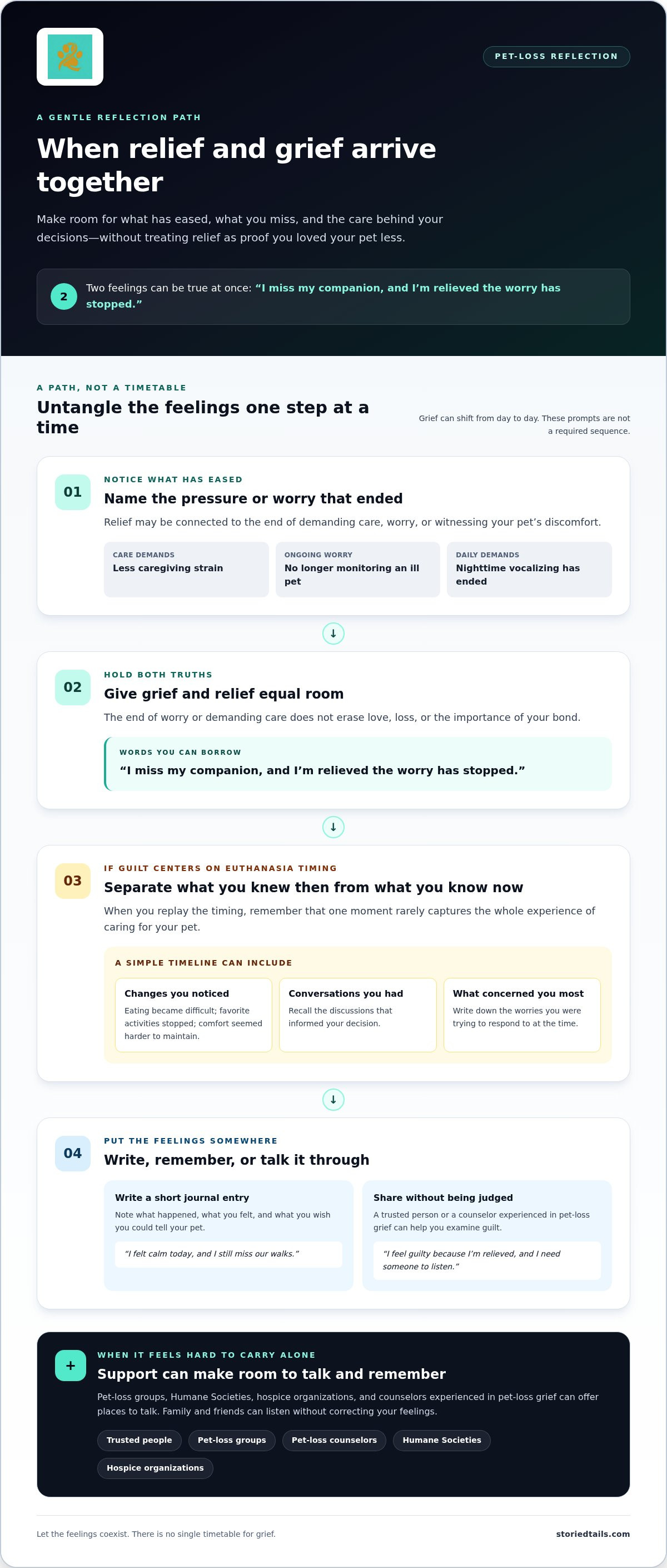
Yes. Relief and sadness can coexist after an animal companion dies because each feeling reflects a different part of your experience. The end of worry or demanding care doesn’t erase love, loss, or the importance of your bond.
Relief as a Common Response
Relief is a normal response to pet loss when pressure or worry connected with care comes to an end. For example, after a pet with separation anxiety dies, leaving home may feel less difficult, even as you miss them deeply. Recognizing what the relief is connected to can help you understand it without treating it as proof that you cared less.
This mixed response may surface in everyday moments: sleeping through the night after a senior animal’s nighttime vocalizing ends, or feeling calmer when you no longer monitor an ill pet. You can name both parts: “I miss my companion, and I’m relieved the worry has stopped.” That honest description makes room for grief and relief together.
Guilt About Feeling Relieved
To cope with guilt, identify what has eased and remind yourself that relief doesn’t mean you wanted your pet to die. Write down the worry or responsibility that has lifted, then add a memory that reflects your care. This can help separate relief about difficult circumstances from your love for the animal you lost.
A short journal entry can give confusing feelings somewhere to go. Note what happened, what you felt, and what you wish you could tell your pet. You might write, “I felt calm today, and I still miss our walks.” If guilt keeps returning, sharing that thought with a trusted person or pet-loss counselor can make it easier to examine.
Family Support During Mixed Grief
Family members can support someone experiencing relief by listening without judging or correcting their feelings. A gentle response might be, “You can miss them and feel some relief after everything you carried.” Don’t suggest that relief means the person didn’t love their animal companion. That assumption can deepen guilt and make honest conversation harder.
Ask what would help today: company, quiet, or time to remember the pet. One family member might share a favorite photograph, while another helps plan a small goodbye ritual. Let the grieving person choose. Practical kindness, such as preparing a meal or sitting together, can offer support without asking them to explain every emotion.
Pet-loss helplines can provide a focused place to talk when friends or family don’t know what to say. You can also find pet-loss groups or counselors experienced in this grief through Humane Societies or hospice organizations. If you contact a helpline, begin with a clear sentence, such as, “I feel guilty because I’m relieved, and I need someone to listen.”
Guilt about euthanasia timing
After euthanasia, grieving owners may replay the timing and wonder whether they acted too soon or waited too long. The decision can feel especially difficult when an illness changed gradually, with better and harder days mixed together. You may remember a peaceful morning and question a choice made after a painful evening. One moment rarely captures the whole experience of caring for your pet.
Try separating what you knew then from what you know now. Write down the changes you noticed, the conversations you had, and what concerned you most. A simple timeline can help: eating became difficult, favorite activities stopped, or comfort seemed harder to maintain. This isn’t a test with a perfect answer. It can reconnect the decision to the information and care you had at the time.
Questions about “too soon” often come from wishing you could have kept your companion longer. Questions about “too late” may arise from remembering distress you hoped to prevent. Both can reflect how much you wanted to protect your pet. When self-blame appears, name the specific thought, such as, “I should have known that would be our last good day.” Then consider what you could reasonably have known then.
If you feel stuck, talk through the decision with someone who can listen without judging. You might ask a family member who shared the caregiving to recall the signs and conversations you experienced together. You can also explain to your veterinarian what still troubles you and ask them to revisit the circumstances. A calm conversation may help you understand the choices you faced, rather than trying to rewrite them from today’s perspective.
Stress can also make a complicated decision feel like a personal failure. Try writing two short lists: what you hoped for your pet and what you were trying to prevent. One list might include comfort, familiar company, and time together; the other might name distress you observed. The lists won’t remove sadness, but they can show how love and concern shaped your reasoning.
Give the memory room to include more than the final decision. Choose a photograph, recall a small ritual, or write a note about what your pet brought to your life. You can grieve the loss and still recognize the care behind your choice. If guilt keeps interrupting daily life, a pet-loss counselor or support group can help you talk through the questions without carrying them alone.
Relief when a pet’s suffering ends
When a pet’s suffering ends, relief may arrive alongside sorrow, exhaustion, or disbelief. According to Oxford Advanced Learner’s Dictionary, relief is the removal of anxiety or pain, or a reduction in pain or worry. That meaning can help explain why you feel calmer after watching your companion struggle through a difficult period. It doesn’t measure how much you loved them.
Caregiving can keep your attention fixed on a pet’s needs. You may have spent nights listening for movement, adjusted plans around medication, or worried whenever your pet seemed uncomfortable. After their death, the absence of those repeated demands can bring a pause in tension. You might sleep more easily, then feel sadness when you wake and reach for the routine you shared.
Try naming the separate emotions rather than forcing them into one explanation. For example, write: “I’m relieved the pain has ended, and I miss sitting beside them.” That sentence makes room for both care and loss. If words feel difficult, record one small memory, such as a favorite resting place or the way your pet greeted you at home.
Talking with friends or family can help you carry memories without defending your feelings. You might say, “I’m glad their struggle is over, but I still wish they were here.” Ask someone you trust to listen, share a story, or sit quietly with you. Practical support can help, too, such as joining you for a meal when familiar routines suddenly feel empty.
A pet-loss support group can offer conversation with people who understand the bond between an animal and their family. You can share what the final days were like, or simply listen until you feel ready to speak. If you prefer writing, keep a short journal of memories and changing emotions. A note about a peaceful moment can sit beside a note about missing your pet.
Small remembrance rituals can make space for love after caregiving ends. Set aside a photograph, light a candle during a quiet moment, or invite family members to share a story. Choose a ritual that feels fitting, not one that asks you to feel a certain way. Your routine may gradually change, while the affection behind it remains part of your life.
If the final days keep returning in painful detail, consider talking with a counselor experienced in pet-loss grief. Begin by describing one moment that troubles you most, then explain what you needed for your pet. Support can help you hold those memories with care while acknowledging the relief that followed their suffering.
Why losing a pet can hurt so much
A pet can shape an ordinary day. You may have shared morning walks, meal times, quiet evenings, and small greetings at the door. Losing that companion changes more than who is beside you; familiar activities can lose their usual meaning. When sadness rises during those moments, the empty space in your routine may help explain why the loss feels so deeply personal.
The bond also grows through repeated acts of care. Filling a water bowl, arranging a favorite blanket, or noticing a pet settle nearby can become ways of expressing love. After the loss, those gestures may still come automatically. You might reach toward the place where your cat used to sleep, then remember they’re gone. The contrast between habit and absence can make grief feel sharp.
Pets often share parts of life that people don’t see. A dog may be with you during a difficult move, while a cat quietly keeps you company through lonely evenings. Their familiar presence can offer comfort without explanation, and losing it may bring sadness alongside changes in sleep, mood, or concentration. Even a favorite chair can hold memories of companionship and make an ordinary afternoon feel different.
Crying is a normal emotional response to losing someone you love, including a pet. Crying can stimulate the release of endorphins, which may be part of why tears sometimes bring a small sense of release. You don’t have to interpret that moment as a sign that grief is over. It may simply be one response among many as you adjust to life without your companion.
Grief can also affect the people around you. A friend who never met your rabbit may not understand why a photo brings tears, while a family member remembers the same daily rituals. Try sharing a specific memory with someone who listens, such as how your pet greeted you after work. If you want to talk with people who understand pet loss, a support group can offer a space for shared stories.
Preserving memories can give your bond a place in the life you’re building now. Choose a photograph, write down a favorite story, or gather a few details about your pet’s personality. A digital pet memorial can help you keep those memories together and share your pet’s story. Create a lasting pet memorial when you’re ready to honor the companion you miss.
StoriedTails: Digital pet memorial and community hub
StoriedTails offers a digital pet memorial and community hub for honoring a pet’s life and keeping their story close. When you’re ready to preserve memories, you can create a place to celebrate the companionship, small rituals, and moments that mattered to your family. The hub also includes Living Pets and pet health record management, supporting your connection with the pets who are part of your life now. These offerings can complement personal remembrance and give you space to reflect at your own pace.
If you’d like to honor your pet’s story or explore the community, visit StoriedTails when it feels right for you.
Let remembrance grow alongside healing
You don’t have to settle on one feeling before moving forward. The feeling of relief after your pet’s death can remain part of a larger story, one that also holds tenderness, longing, and the ways your companion changed your life. Give yourself permission to notice what you need today, whether that means sharing a memory, keeping a quiet ritual, or simply letting the day unfold gently.
As time passes, you may find new ways to carry your pet’s presence into ordinary moments. A remembered greeting, a photograph you return to, or a story shared with someone who understands can keep your connection close without asking grief to disappear. There’s no need to rush the process or make your emotions look a certain way.
If you’d like a welcoming place to honor your pet’s story, connect with StoriedTails. Take the next step when it feels right, and let remembrance remain part of the love you shared.
Frequently Asked Questions
How long does grief after pet euthanasia last?
Grief after pet euthanasia has no fixed duration, and it may change rather than disappear all at once. You might feel steadier for a while, then find sadness returning when you see a favorite toy or reach for the leash. Instead of measuring progress by a deadline, notice whether you’re finding room for ordinary activities and meaningful memories. If grief feels too heavy to carry alone, support is available.
Is it normal to cry for days after a pet dies?
Yes, crying for days after a pet dies can be a normal response to loss. Tears may come while sorting a collar, hearing a familiar sound, or talking about your pet with someone who knew them. Crying can stimulate the release of endorphins, though that doesn’t mean it will make grief feel better immediately. Let yourself respond naturally, and reach out to someone you trust if you need company.
When should I see a counselor for pet grief?
Consider seeing a counselor when you want help processing the loss or feel unable to manage painful memories alone. This can be especially helpful if you keep reliving the events of a traumatic death, which may continue for weeks or months. A counselor experienced in pet-loss grief can help you talk through what stays with you. You might begin by describing a memory that feels especially difficult to revisit.
Why Does Losing a Pet Hurt So Much?
Losing a pet can hurt deeply because the bond is built through shared care, companionship, and familiar daily moments. A quiet greeting at the door or your dog waiting beside your chair may have helped you feel at home. After the loss, those moments can make the absence vivid. Naming the particular routines you miss can help you understand what the relationship brought to your life.
Why do I feel guilty after pet euthanasia?
Guilt after pet euthanasia can grow from wishing you could know exactly how events would unfold. You may replay a choice and imagine a different outcome, even though you made it while facing uncertainty. Write down what you observed and what mattered to you at the time, such as comfort, companionship, or your pet’s changing needs. This can help you see the decision in its original context, rather than through hindsight alone.
Why does the loss of a pet hurt so much?
The loss can be painful because a pet may shape how you spend time, care for others, and feel connected at home. An evening walk might have marked the end of each workday, or feeding your cat might have been a shared family ritual. When those patterns change, sadness can touch several parts of life at once. Noticing what you miss most can guide the support you seek.
Is it normal to feel relief after a pet dies?
Yes, relief can be a normal response after a pet dies, and it can exist alongside missing them. A feeling of relief after your pet’s death may come from easing worry or the end of a demanding period of care. It doesn’t mean you wanted your pet to die. Name what feels lighter, and remember that this feeling and your love for your animal companion can both be true.
Why might someone feel relief after their pet's death?
Someone might feel relief because their pet’s death ends the worry, strain, or distress surrounding the final period of care. A person who spent nights listening for signs of discomfort, for example, may notice their anxiety ease afterward. If they knew death was approaching, some grief may have begun before the loss. Relief describes a change in worry or strain, not the depth of the bond.